*Warning: Potential spoilers for Shazam! ahead.*
Over the past six years, Warner Bros. has attempted to build a cinematic universe based upon DC comics. We’ve seen Superman fly faster than a speeding bullet, Batman instill fear, Wonder Woman inspire hope, and Aquaman grow into a king. The road toward building this foundation hasn’t been without its fair share of potholes and speed bumps, but each new movie has improved on its predecessor and further pushed the progress of the DCEU in the right direction. Building off what made Wonder Woman and Aquaman so successful, Warner Bros. finally struck gold in what is easily the best DC movie to date in Shazam!
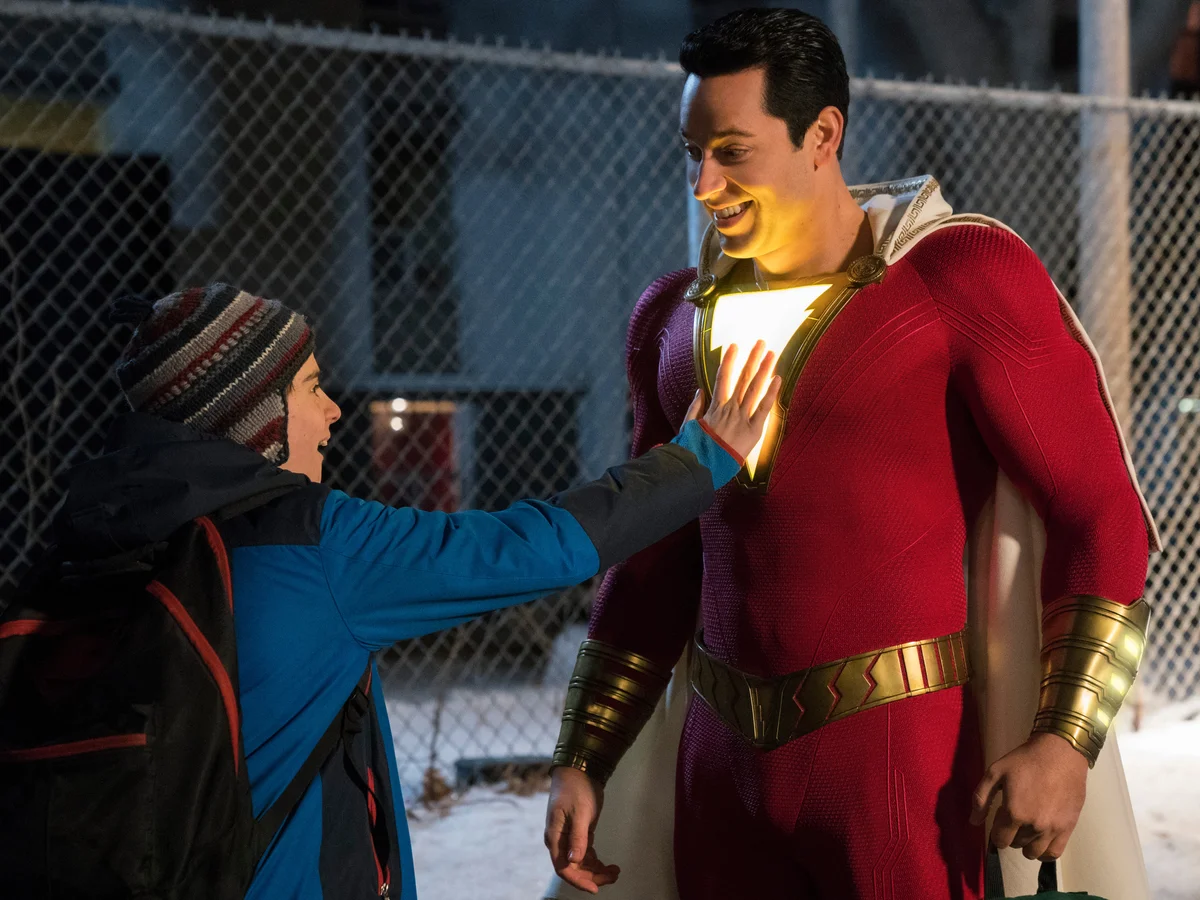
Growing up as an orphan, Billy Batson didn’t have much. Separated from his mother at a very young age, Batson spent the majority of his young adolescence running away from each new foster home he ends up in. Eventually, the 14-year-old is sent to a group home where he meets Freddy Freeman. Behind a great performance by IT: Chapter One‘s Jack Dylan Grazer, Freeman is a walking superhero encyclopedia and once Batson receives the power of Shazam, he shows him the ropes of how to be a hero. But more importantly, Freddy is a guiding light for Billy throughout the film as he discovers what it truly means to have a family.
Just like any other kid, I wanted to be a superhero. I would argue whether super speed or super strength was a better power, what kind of costume I’d wear, what cool catchphrase I’d say before beating up bad guys, and what name people would chant after I saved the day. This right here is what separates Shazam! from most other superhero films, because of how relatable it is. Instead of having this orphaned teenager suddenly develop a sense of justice immediately after getting his powers, we see Billy and Freddy react exactly how any other kid would. They run test simulations to determine the extent of his powers, figure out whether or not *he’s* bulletproof or his suit, and try to think of creative names (*ahem* I’m still a fan of Captain Sparkle Fingers, but what do I know). Don’t get me wrong, the idea of saving innocent people is evident, but these are orphaned teenagers, so watching Billy ask to buy beer for example because he looks like he’s 30 is more believable than him swearing to protect his city right away. I think we’ve lost sight of how fun it would be to have superpowers and Shazam! reminds us of that. Watching how the young boys react to Billy’s newfound abilities and how that affects their very new relationship feels pure and not manufactured. Billy’s initial fear and confusion when he becomes Shazam combined with Freddy’s amazement and subsequent envy toward Billy is exactly how I would imagine two teenagers to react. This level of realism is something that’s not really apparent in most superhero films and that’s where Shazam! excels at.
The cheerful, funny tone Shazam! embraces follows suit with Aquaman, and further cements that dark, serious movies aren’t always the right move. The Dark Knight trilogy benefited greatly by having a darker tone, but with Warner Bros. failing to replicate that success with their early DCEU movies, it’s encouraging to see the studio pivot away from that approach first with Aquaman and now with Shazam!
Although DC has plenty of quality heroes to be proud of, it can be argued that the real bread and butter are its villains. This doesn’t change in Shazam! with Doctor Thaddeus Sivana. Played by the talented Mark Strong (Kingsman franchise), Doctor Sivana was one of the many individuals who were deemed unworthy to possess Shazam’s power as a child. Of course, this sends Sivana on an obsessed mission to find his way back to Shazam’s temple and take the power by force. If Freddy is the one who helped Billy understand his powers, then Sivana is the catalyst behind the 14-year-old coming to the realization that this gift can be used for something more than charging strangers phones. The hatred and disdain in Sivana toward Billy feels authentic and I cannot wait to see what the crazed doctor comes up with in the inevitable sequel.
With recent rumors that Warner Bros. might be reconsidering and rethinking the idea of a shared universe, I was curious to see if and how Shazam! would reference other DCEU films and heroes. I was pleased that not only did Shazam! include plenty of DC Easter eggs, but they just felt “right”. Freddy rotates through different DC shirts, carries a Superman backpack, and we even get a sly jab at Aquaman for being able to talk to fish. Shazam! also quietly laid down the framework for where Warner Bros. could take the DCEU. In the mid-credits scene, we’re introduced to Mister Mind and his “Monster Society of Evil”. This revelation hints that this mysterious group of villains will play a major role in future films, but also makes me wonder if the Monster Society of Evil could fill the role of the Legion of Doom in the DCEU. The idea of bringing the Legion of Doom into the DCEU has yet to fully materialize onscreen, but it’s something many fans have to be wondering about. DC has a treasure trove of iconic villains and seeing them band together to take on the Justice League in some form would be a heavy undertaking, but one that would surely be worth it.
After dealing with a few more misses than hits, Warner Bros. seems to have finally found it’s footing with Shazam! The studio deserves a tremendous amount of credit for appearing to have righted the ship, and has set up what should be a bright future ahead. The cast was superb and the amount of diversity, without being forced, was a great sight. The chemistry between Zachary Levi, Asher Angel, and Grazer is so fun to watch, and I think it would be wise for Warner Bros. to build more upon the foundation that Shazam! laid down. The newest DC film has a ton of heart with a powerful message that while no one is truly pure of heart, making the right choice when the opportunity rises and putting other people’s interests before yours is what makes you a hero.
Final Score: 9.25/10
Leave a Reply