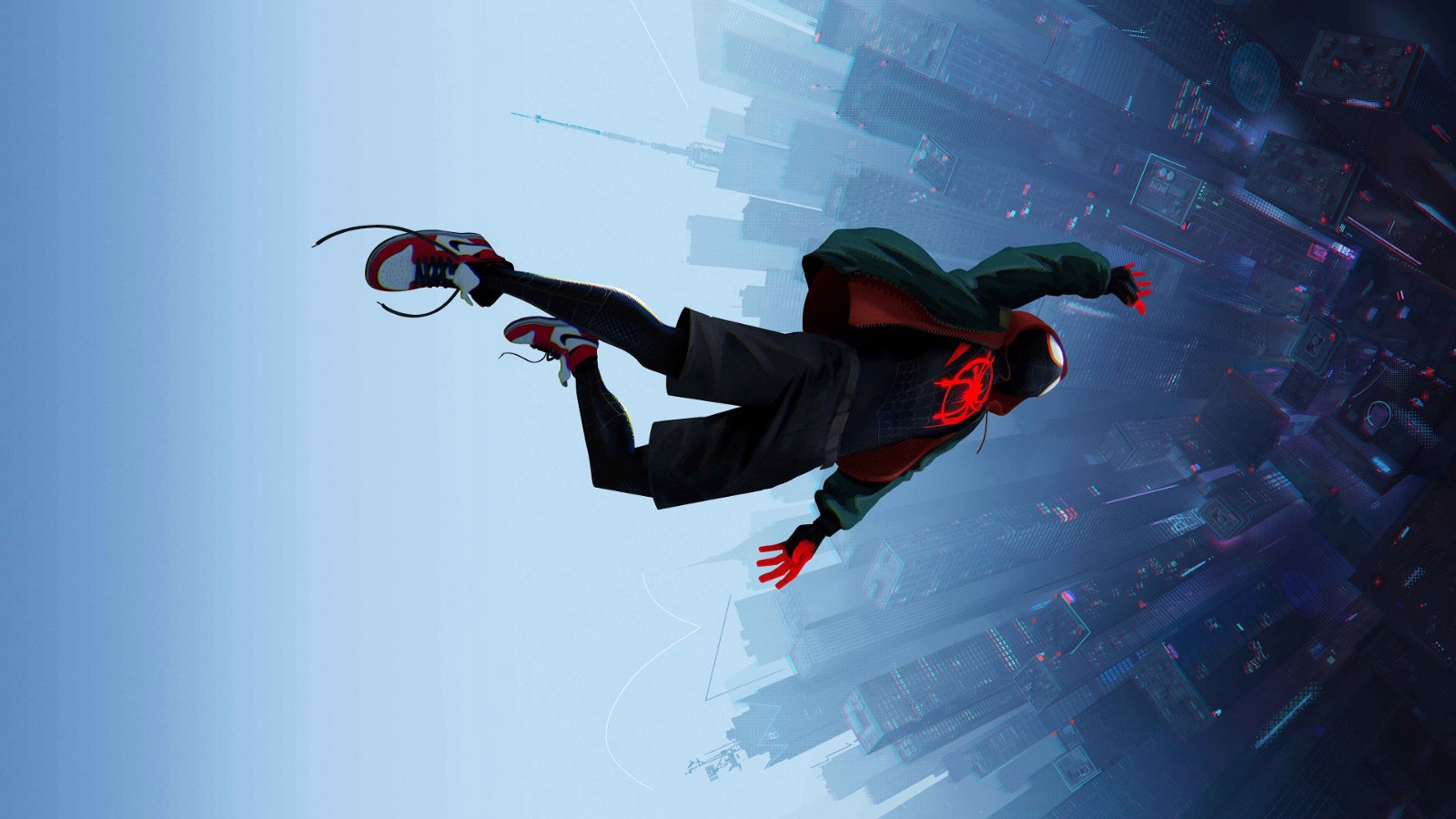
The story of Marvel’s beloved web-head has been told in many, but very similar, ways. With a total of nine movie appearances, Spider-Man fans could recite Peter Parker’s origin story by memory: bitten by radioactive spider, gets superpowers, Uncle Ben, “great power comes great responsibility”, saves the day. Thankfully, Sony’s Spider-Man: Into the Spider-Verse do us all a favor and presents the audience with an adventure that we’ve never witnessed on the big screen. And the kicker? It doesn’t star our favorite Daily Bugle photographer.
Into the Spider-Verse focuses on the story of young Miles Morales. Created back in 2011, Morales grew up in the Ultimate universe, taking up the mantle of Spider-Man after Peter Parker died. Once the Ultimate universe collided with the main Marvel universe in 2015, Morales began to appear along-side other heroes under the All-New, All-Different comics.
In the film, Morales is a bit of a loser. He doesn’t have any friends at the boarding school he attends, his father objects to the graffiti artwork he does around the city, and he really only feels comfortable being with his Uncle Aaron. From the beginning, there are many similarities between Morales and Parker prior to them being bit by the spider. However, once Morales obtains his powers, he begins to forge his own path toward being a superhero.
Aside from the standard spidey-sense and being able to crawl on walls, Morales ends up with a few more tricks up his sleeve that would make Parker green with envy. Morales is able to camouflage himself to go full invisible and he can emit an electric shock called “Venom Blast”. The “Venom Blast” attacks an enemy’s nervous system, and if used correctly, will completely render them useless.
The biggest appeal to Morales, however, isn’t the different set of powers he has compared to Parker; it’s his ethnicity. Earlier in February, Marvel released Black Panther, which finally showcased a minority hero in the spotlight. Black Panther brought a wave of inspiration and, most importantly, confidence among the African-American community. Sony’s idea of Morales completely captures the essence behind’s Marvel’s T’Challa and cranks it up. Witnessing a half-black, half-Latino teenager in Morales become a hero is something many young children needed to see, especially in today’s society. It’s easy to say “why not just look up to Spider-Man, he wears a mask”, it’s the concept of knowing that this specific person looks just like you and they’re capable of doing amazing things. Seeing that on the big screen has a lasting affect that can impact a generation.
Fans of Netflix’s now-canceled adaptation of Daredevil will be familiar with the main villain of Sony’s animated film: Wilson Fisk, aka, the King Pin. Even though Into the Spider-Verse is rated PG-13, Sony’s version of Fisk is downright terrifying. A towering man, Fisk is built like a freight train with the strength to crush your entire body if he gets the chance. In addition to his ridiculous physical stature, Fisk holds a machine in his possession that’s capable of opening a portal into different parallel universes. Fisk wishes to use this machine to bring back another version of his dead wife and son, who perished in a car accident after seeing the true evil nature of him.
The main message behind Into the Spider-Verse is a simple one: anyone can be Spider-Man. This is apparent midway through the movie when we’re introduced to a rag-tag team of Spider-people from a few interesting universes: Spider-Man (older Peter Parker), Spider-Woman (Gwen Stacey), Spider-Man Noir, Peni Parker and her armored spider suit, and Spider-Ham (Peter Porker). Remember when I said that the origin story of Spider-Man has been pretty much memorized at this point? Well, Sony had the same idea, and they made it pretty apparent during the introductions of these characters. Each hero brings with them their own special trait, such as Spider-Woman having enhanced acrobatic skills and Spider-Ham being able to pull a giant cartoon hammer from his pockets (which I didn’t think their suits had). Spider-Man is the type of hero that many children growing up envisioned themselves to be, especially because of his mask he could literally be anyone. So, seeing literally multiple different versions of the hero on screen, all with their own unique powers was amazing. It strongly spreads the message that regards of what you look like or whether you’re male, female, a pig, it doesn’t matter as long as if you have good intentions to protect people, and if you get bite by a radioactive spider in the process, anyone can be a hero.
Sony’s Spider-Man: Into the Spider-Verse contains a tremendous amount of heart, something that I didn’t expect to see in an animated film. People might discredit the intensity or raw emotion of an animated movie, but I can say with extreme certainty that not only is this the best Spider-Man movie, but one of the best superhero movies to date. The emotional roller coaster keeps you on the edge of your seat from start to finish, the portrayal of King Pin is arguably one of the best iterations of a villain ever, the ensemble of Spider-people expand the mindset of the average Spider-Man fan in an amazing way, and the animation is simply breathtaking. Sony changed the attitude toward superhero movies with Sam Raimi’s original Spider-Man trilogy in the early 2000s, and now, it looks as though the studio might have broken another barrier with Into the Spider-Verse.
Final Score: 10/10
*Special note about Stan Lee*
Sony’s Spider-Man: Into the Spider-Verse was the first Marvel movie released after the passing of creator Stan Lee. The New York native breathed life into many of the heroes we love today, most notably, Spider-Man. Lee gave us a hero that many could relate to: economically poor, bullied at school, a bit of a loner, and always trying to do anything within his means to make ends meet. Even after Spider-Man obtained superpowers, Lee continued to write the character as if he was still an average Joe, except he could climb on walls and swing through New York City. Being able to connect so deeply with a hero of Spider-Man’s caliber, plus the overall message from Sony about how anyone can be Spider-Man, truly encapsulates the kind of man Stan Lee was. His stories provided hope, happiness, and inspiration, which will live on for countless years to come. Thank you Stan Lee for everything you did for me and everyone else in the world. You were a real superhero.
Leave a Reply